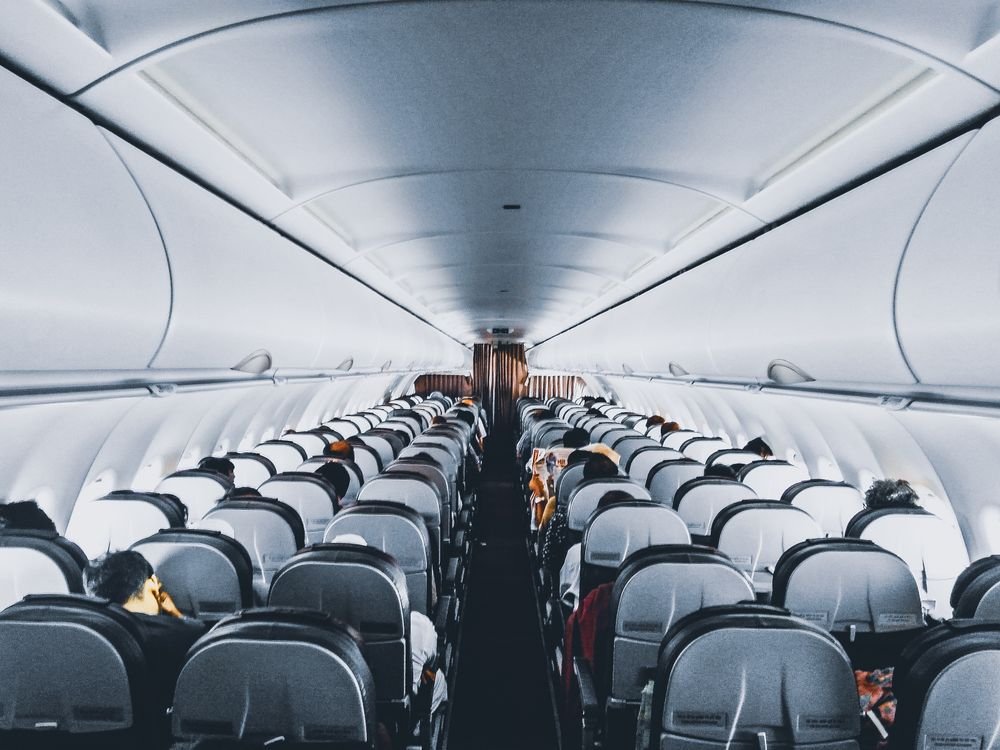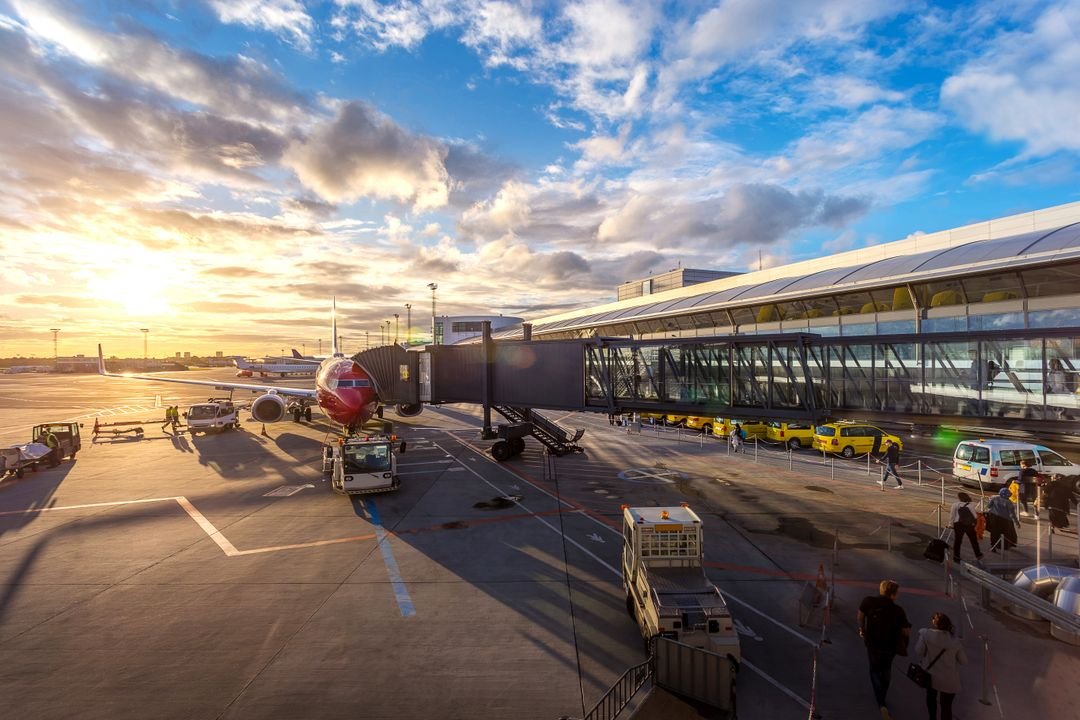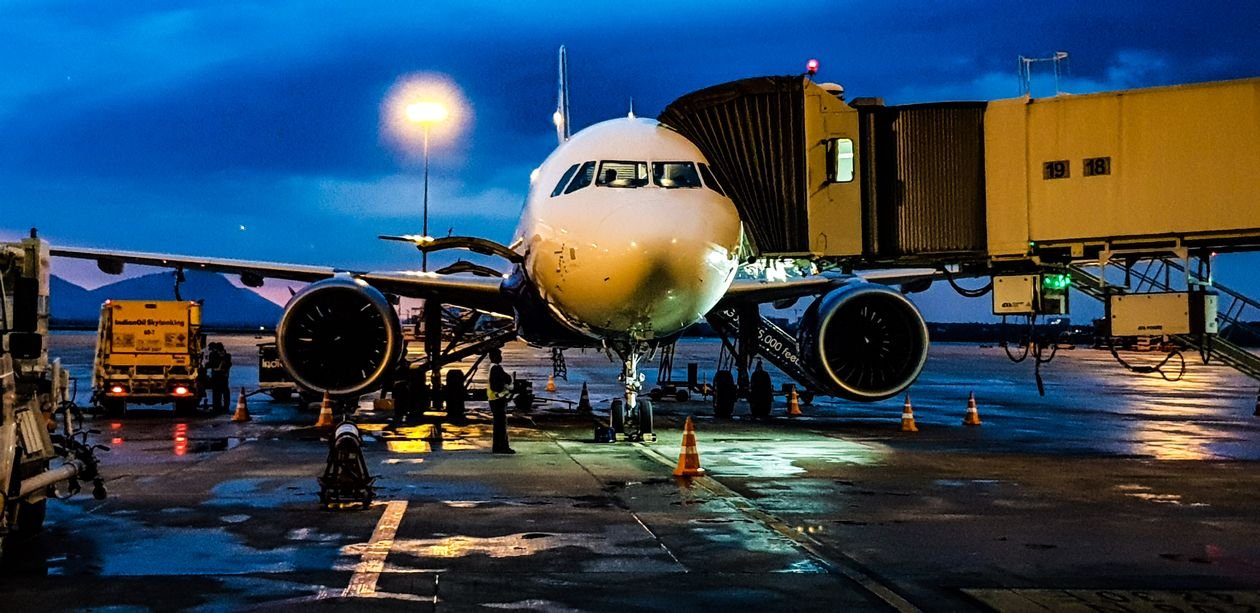
Boarding is the busiest twenty minutes of a cabin crew member’s day. Passengers stream on tired, stressed and often carrying more than they should, and every one of them needs something from you — a seat found, a bag stowed, a question answered — all while the clock ticks towards pushback. Your English has to be fast, warm and completely clear, because a passenger who misunderstands you at the door creates a problem that spills down the whole aisle. The reassuring part is that boarding English is remarkably predictable. The same twenty or so situations come up on every single flight, and once you own the phrases for each, you can handle the rush without ever reaching for words.
The welcome at the door
Your first few words set the tone for the entire flight, so keep them short, genuine and repeatable. “Good morning, welcome aboard” works for hundreds of passengers in a row without ever sounding forced. When you need to direct someone, point with an open hand and say the seat clearly: “You’re in 24C? That’s straight down, on your left.” Notice the rising check — “24C?” — which quietly confirms you’ve read the boarding pass right before you send them off. If the aisle is blocked, a calm “Take your time, there’s no rush” does more to keep things moving than urging people to hurry ever will. Passengers mirror your energy: sound flustered and they get flustered, sound unbothered and the whole cabin settles.
Bags, seats and the endless overhead-locker problem
Nothing eats boarding time like cabin baggage, so these phrases earn their keep. To ask someone to move a bag: “Could I ask you to pop that under the seat in front? We’re a full flight today.” The reason — “full flight” — turns a demand into something reasonable, and people comply far more readily when they understand why. When a locker is full: “This one’s full, I’m afraid — let me find space for you a few rows back, and you can collect it on arrival.” That last clause matters enormously, because the real fear is losing sight of the bag; reassure them and the tension drops. For a bag that simply won’t fit, be honest and quick: “This will need to go in the hold — I’ll tag it here and it’ll be waiting for you at the carousel.” Clear, kind, no apology marathon.
When something goes wrong
Double-booked seats, passengers in the wrong place, families split up — boarding throws these at you constantly, and the phrasing is what keeps them small. Start by owning the situation without blame: “Let me sort this out for you.” If two people hold the same seat, “Bear with me one moment while I check this” buys you time without alarming anyone. To move a passenger for a family: “Would you mind swapping to an aisle seat just here, so this family can sit together? It’s the same class of seat.” Framing the swap as equal — “same class of seat” — heads off the sense of being downgraded. Staying unhurried under this kind of pressure is a skill in itself, and it’s closely tied to handling difficult passengers in English, where the calm phrase almost always beats the clever one.
Clarity over politeness formulas
New crew often over-pack their English with courtesy — “I’m terribly sorry to bother you but would it perhaps be at all possible if you wouldn’t mind…” — and by the time they reach the point, the passenger is confused and the queue has grown. Safety and speed come first; politeness lives in your tone, not in extra words. “Seatbelt fastened for me, please” with a warm smile is both perfectly polite and instantly understood. When you give an instruction that genuinely matters, make it plain: “I need you to take your seat now, we’re about to close the doors.” Passengers respect crew who are clear far more than crew who are elaborately apologetic, and in an emergency that habit of plain, direct English becomes something much more important than courtesy.
Boarding English isn’t about a huge vocabulary — it’s a compact toolkit of phrases you can deliver smoothly while your hands and eyes are busy with everything else. The only way it becomes automatic is to practise it out loud in the exact situations you’ll face, which is precisely what the aviation-focused training at Kensington English is built around: real cabin scenarios, roleplayed until the right words come without thinking. Pick three phrases from this article, say them aloud until they feel natural, and take them to your next shift — confident boarding starts with knowing exactly what you’ll say before the door even opens.