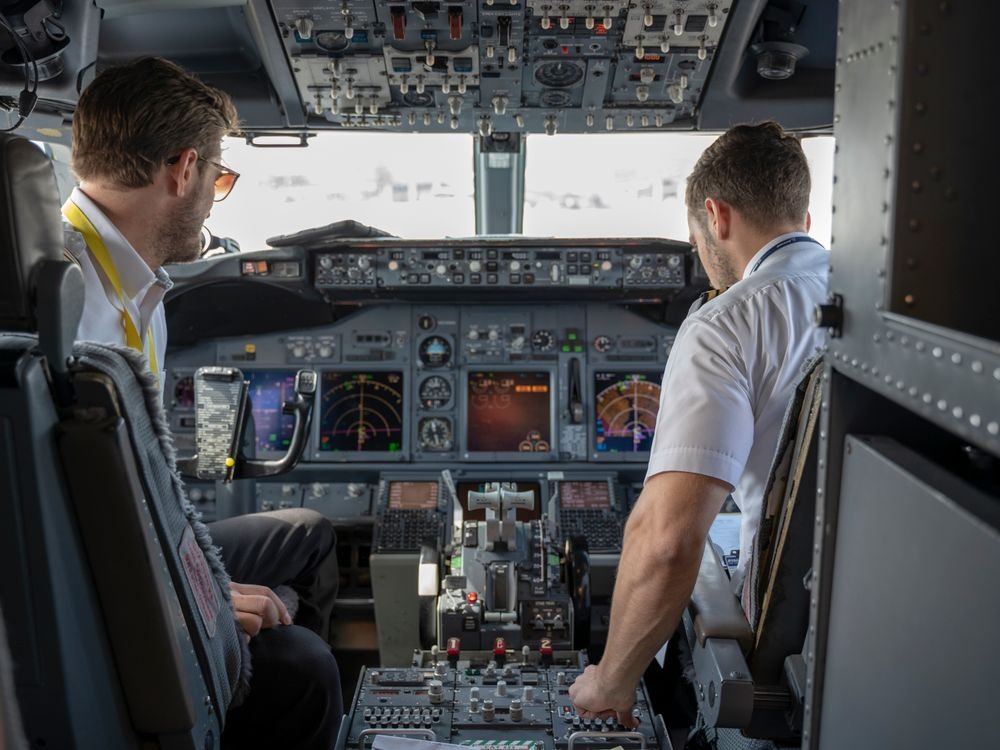
When people picture aviation English, they picture the flight deck — pilots on the radio, cabin crew making announcements. But some of the most safety-critical English in the whole industry never gets said out loud on a frequency. It's written on a task card, typed into a defect log, or spoken across a workbench at 3am during a shift handover. If you're a licensed engineer, a mechanic, or an avionics technician working to English-language documentation, the words you choose can decide whether an aircraft is released to service correctly or held on the ground. This is the English that keeps maintenance teams safe, and it's worth learning as deliberately as any pilot learns radiotelephony.
Why maintenance English is its own skill
Most aircraft maintenance in the world is documented in English, whatever language the team actually speaks on the hangar floor. Manufacturers write their manuals in English, regulators publish airworthiness directives in English, and a technician trained in Istanbul, São Paulo or Ho Chi Minh City reads exactly the same maintenance manual as one in London. That's the point of a common language — but it only works if everyone reads it the same way. Maintenance English is precise, procedural, and full of instructions where a single verb matters: inspect is not replace, torque is not tighten, and as required means something exact. General English fluency doesn't automatically give you this. You can be perfectly comfortable ordering dinner in English and still misread a caution note in an aircraft maintenance manual, because that note is written in a controlled, unforgiving style you were never taught.
The vocabulary that actually matters on the hangar floor
Start with the verbs, because instructions live or die on them. Maintenance documentation leans on a tight set of action words used with strict meanings: inspect, verify, check, ensure, remove, install, fit, secure, torque, lubricate, disconnect, deactivate, discard, reinstall. Learn these as a group and learn the difference between the near-synonyms — remove and install is a two-step job, while replace assumes a new part goes in. Then the nouns of the airframe and systems: fuselage, empennage, nacelle, bleed air, hydraulic actuator, fastener, torque wrench, safety wire, placard. And the small function words that change everything: if, unless, prior to, in accordance with, as applicable. A caution that reads "do not apply power prior to disconnecting the actuator" is safe only if prior to is understood exactly. Read your own manuals and highlight every word you'd hesitate to explain to a new apprentice — that highlighted list is your real syllabus.
Reading the paperwork: manuals, task cards and defect reports
Maintenance runs on documents, and each one has its own English. The Aircraft Maintenance Manual (AMM) is written in a deliberately restricted style — short sentences, one instruction each, no idioms — because it's designed to be read under pressure by non-native speakers. Task cards break that manual down into signed-off steps, so you need to read a step, do exactly what it says, and sign only for what you did. Airworthiness directives and service bulletins tell you what must be done and by when, and their conditional language ("applicable to aircraft with serial numbers up to…") decides whether a job even applies to your aircraft. Then there's the writing you produce yourself: the defect entry. "Nose gear light intermittent on taxi, suspect microswitch, ops checked serviceable" has to be clear enough for the next shift and clean enough for an auditor a year later. Vague defect English — "something wrong with light" — is where traceability breaks down.
Handovers and shift changes: where errors hide
Ask any experienced engineer where things go wrong and many will say the same thing: the handover. A job started on the day shift and finished on the night shift crosses a language gap every single time, and if the outgoing technician can't clearly say what's done, what's outstanding, and what's been left disturbed, the incoming one is guessing. Good handover English is unglamorous but learnable: state the aircraft and the job, say what stage it's at ("panel's off, inspection done, waiting on a part"), flag anything abnormal, and confirm the other person has understood by getting them to say it back. This is the same read-back discipline pilots use on the radio, applied to a workbench. It's exactly the kind of high-stakes, real-world communication our FLY ME! aviation English programme is built around — English trained for the job, not for an exam.
How to build the English your team needs
You don't fix this by studying general grammar harder. You build it from your own work. Take a real task card and read it aloud to a colleague, then have them describe the job back to you from your words alone — if they can't, your English wasn't clear enough. Keep a running glossary of the terms and phrases specific to your fleet and your role, and review it the way you'd review a tool inventory. Practise writing defect entries and have someone senior mark them for clarity, not just correctness. And treat listening as a real skill: brief and de-brief jobs in English out loud, because the pressure of speaking is different from the calm of reading. A structured course that uses genuine aviation material, rather than generic business English, will get you there faster because it drills the exact register you work in.
Maintenance and engineering teams carry a huge share of aviation's safety on their shoulders, and a surprising amount of that safety travels through English — on the card, in the log, across the handover. Getting that English right isn't about sounding impressive; it's about being understood exactly, every time, by someone who wasn't there when you did the work. If you'd like to build that precision with teachers who understand the aviation context, take a look at our aviation English options on the courses page. Clear English on the hangar floor is quiet, unshowy, and absolutely essential — which is exactly why it's worth training properly.