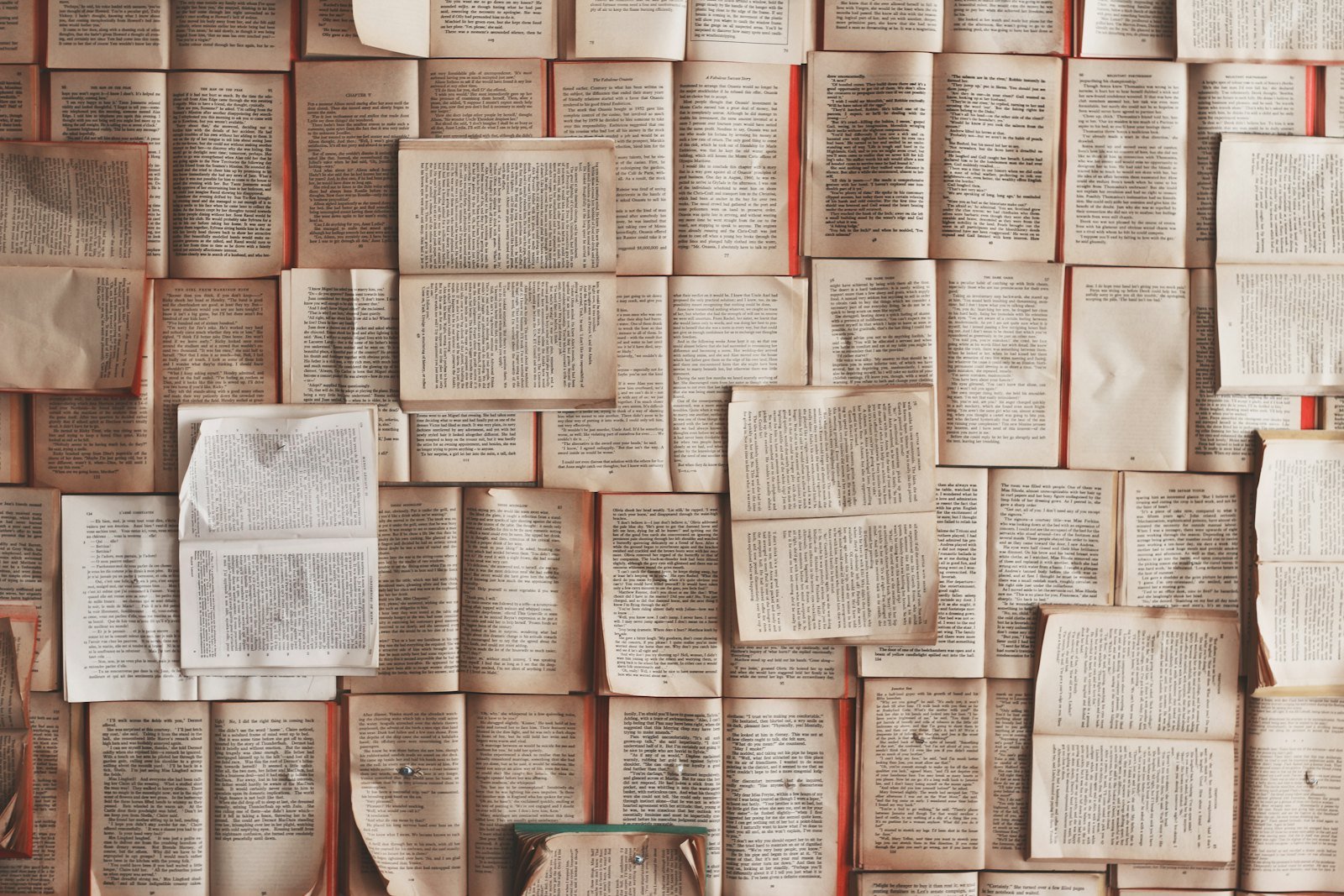
Almost every English learner has done this at least once. You buy a beautiful new English novel, full of confidence. You read three pages, look up fourteen words, lose the thread of the plot, and quietly slide the book onto a shelf where it sits for the next two years, mocking you. The shame is so familiar that most learners decide reading just isn't for them — that they're "not the reading type" — when really, nobody taught them how to read in a foreign language without burning out by chapter two.
Reading English books is one of the most powerful things you can do for your English. It floods you with natural sentence patterns, builds vocabulary you actually keep, and trains the rhythm of fluent writing into your ear. The trick isn't trying harder. It's reading differently.
Choose a Book You'd Read in Your Own Language
Most learners pick books that are too literary, too long, or too important — Dickens, Austen, a novel that won the Booker Prize. They think hard books make hard learners stronger. They don't. They make learners quit.
The single best thing you can do is pick a book you'd happily read on holiday in your first language. A breezy thriller. A romance. A football autobiography. A simple memoir. Books with strong plots and short chapters, where you actually want to know what happens next. Curiosity is what carries you through pages 50 to 500 — not willpower. If you don't care what happens, no amount of grammar drilling will save you.
Young-adult fiction is a quiet superpower here. The language is natural and modern, the stories move quickly, and the chapters are short enough to feel finishable on a tired evening.
Stop Looking Up Every Word
This is the habit that kills more English readers than any other. You hit a word you don't know, you reach for the dictionary, you spend forty seconds checking three definitions, you come back to the page — and you've completely lost the rhythm of the sentence. Do that twenty times a chapter and you're not really reading any more. You're translating, slowly and miserably.
The rule that works: only look up a word if (1) it appears more than once and (2) the sentence stops making sense without it. Everything else, just keep going. Your brain is much better at picking up meaning from context than you give it credit for. By the third or fourth time you see "frowned" or "shrugged" or "muttered", you'll have a feel for what it means without ever opening a dictionary. That's how real vocabulary is built.
Read for the Story, Not for Perfection
Drop the idea that you need to understand every sentence. Native readers don't either. They skim descriptive passages, glaze over names of background characters, and miss the odd metaphor. The story still lands. Reading is supposed to feel like watching a film with slightly blurred subtitles, not like decoding a maths problem.
If a paragraph is dense and you're losing energy, give yourself permission to glide. Catch the gist. Move on. The next page nearly always clarifies what you missed. What matters is finishing the chapter — because the act of finishing chapters is what builds the reading habit, and the habit is what makes you better at English.
Build a Reading Routine That Survives Bad Days
Most learners try to read for an hour and then quit when they can't keep that up. A much better target is fifteen minutes a day, every day, even on the days when you're tired and grumpy. Fifteen minutes is short enough that you can't talk yourself out of it. Over a year, fifteen minutes a day is more than ninety hours of English input — far more than most students get from class alone.
Pick a fixed slot — first coffee in the morning, the train commute, the last thing before bed. Keep the book in the same place. Don't wait to "feel like reading"; that feeling shows up about three minutes after you've started, never before. The routine is what makes you a reader. The mood follows.
Re-Read, Don't Just Move On
Once you've finished a book, don't immediately rush to a harder one. Read it again. The second pass is where most of the real learning happens — you finally notice the sentence patterns you missed the first time, the phrasal verbs that kept reappearing, the way characters argue and apologise and tease each other in natural English.
You'll be amazed how much faster the second read feels, and how many words have quietly become yours. After two passes through a book you genuinely enjoyed, you'll have absorbed more practical English than from any vocabulary list of the same length.
Reading in English is less about discipline and more about choosing the right book and giving yourself permission to read imperfectly. Pick something you actually want to finish, stop reaching for the dictionary, read a little every day, and re-read what you loved. The results sneak up on you — and one day you'll notice the words coming out in your own speaking and writing without ever having sat down to study them.
If you'd like to read alongside a teacher who can help you choose the right book and unpack the trickier passages with you, our small-group classes weave reading and conversation together throughout every level — take a look at our courses.